
Easter a Multi-cultural Tradition
Historical Treasure
Easter a Multi-cultural Tradition
By: Suzy Dunning
Like a colorful mosaic, springtime is specks of color pieced together by the vivid paintbrush of nature. Each flower petal and budding leaf, or the sun beaming through tiny droplets of rain on the window add to the season’s vibrant tile. The mosaic of Spring breathes and hums with life. Spring is not just a season; it’s a moving masterpiece endlessly in bloom. Like this season of renewal, the Easter holiday is much in the same way, a blend of evolving traditions. One example of a long time Easter tradition is the Pappmaché Ostereier or German Paper Mâché Easter Egg. This week’s Historical Treasure holds a small wooden rabbit inside. Traditionally the paper mâché eggs would be filled with small candies, snacks or other trinkets.
The brightly designed eggs feature playful animal characters, flowers and other springtime images. Used as a popular way to give treats since the late 19th century, it’s not surprising to know that this tradition is still going strong today. Although the paper mâché eggs in the collection of the Vigo County History Center are undated, by their time-worn design and delicate paper lace trimming we know they are quite aged.
The symbol of the egg in modern Easter traditions comes from a blended background of pre-Christianity belief and Christian influence. In ancient times eggs were seen as a symbol of fertility, rebirth and prosperity. As a way of teaching the life of Jesus Christ, the egg represents Christ’s tomb and resurrection. With deep rooted symbolic meaning and a multi-cultural attachment to faith-based celebrations, I’d say the Easter egg is one “Egg-stra” special tradition.
For many years the Vigo County Historical Society showcased a fantastic Easter egg tree. Standing 13 feet tall and displaying over 500 blown and hand decorated eggs, the Easter tree was a highly anticipated spectacle for the people of Terre Haute.
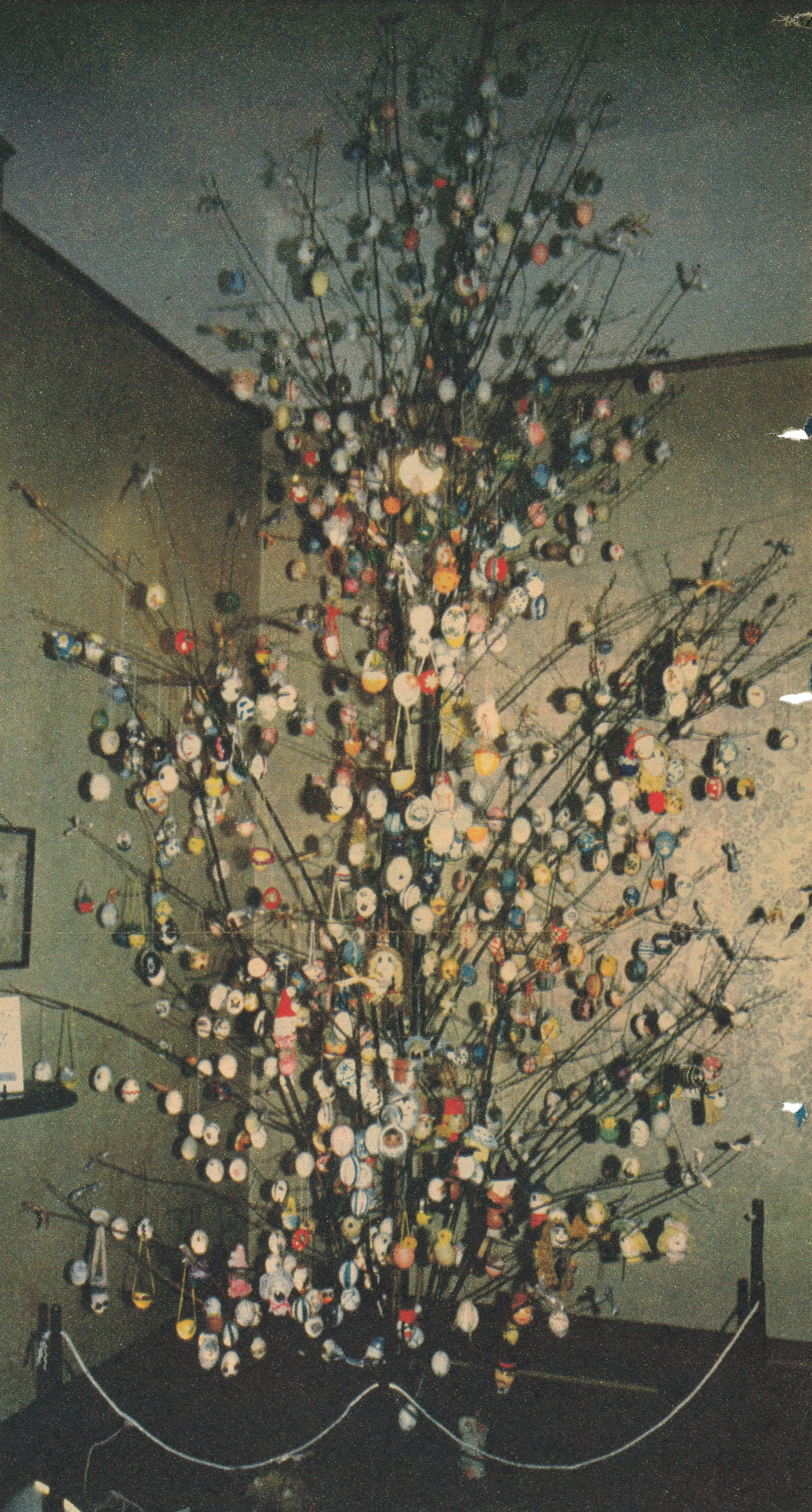
Easter Tree
